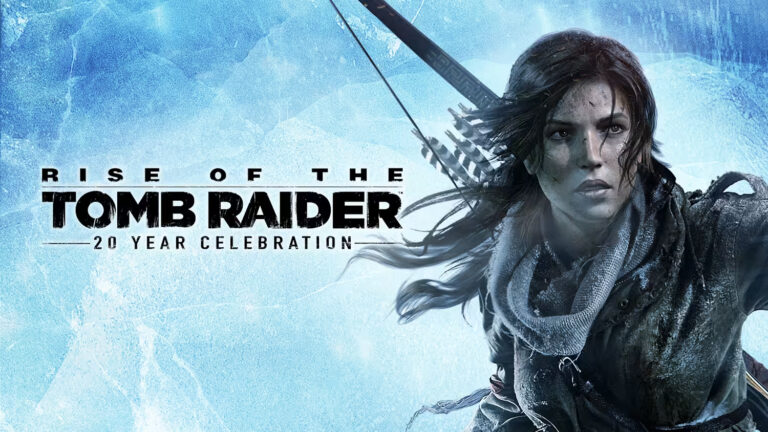
The first part of the “Survivor” era of the Tomb Raider reboot was a solid, gritty third-person action-adventure that injected a lot of cinematic flair into the franchise. It was derivative of Uncharted at the time—ironic, since Uncharted itself was inspired by Tomb Raider, turning the whole thing into a bizarre self-referential loop. Platforming became streamlined, health regenerated, and Lara Croft traded her dual pistols for a bow and a survival instinct.
Despite aping off Naughty Dog, Lara’s reboot still proved to be a deeper and better game than Uncharted. Unlike Nathan Drake, Lara was often set loose in open-ended environments that looped around to other areas, Metroidvania-style. She got incremental upgrades, and the level design was denser. Still, there was room for improvement—and hope remained that the sequel would take the gameplay to an even deeper level.
The oddly titled Rise of the Tomb Raider is the second part of the “Survivor Trilogy.” Originally a late-gen Xbox 360 game, it was eventually ported to PlayStation 4, Xbox One, and PC. It had a contentious DLC implementation when it launched in 2015, but it has since been rebalanced. This was a fairly demanding game when it came out—more so than its predecessor—and now it’s arrived on Nintendo Switch 2. How does it fare? Let’s dive in.
Overview
-
Developer: Aspyr, Crystal Dynamics, Eidos-Montréal
-
Publisher: Aspyr, Crystal Dynamics, Eidos-Montréal
-
Platforms: Windows, Xbox 360, Xbox One, PlayStation 4, Nintendo Switch 2 (reviewed)
-
Release Date: November 10, 2015 / June 9, 2026
-
Price: $29.99
The Story – A Predictable Conspiracy
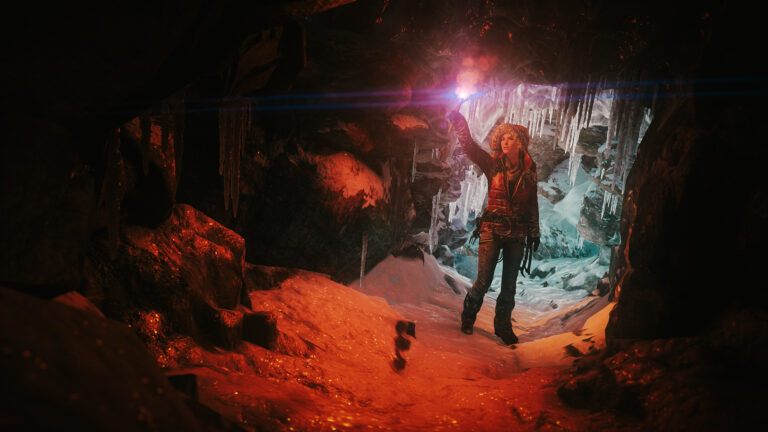
About a year after the harrowing events on Yamatai, Lara is set on proving her father was right about the secrets of immortality and clearing his name. The main thrust of the story revolves around her search for the lost city of Kitezh and something called the “Divine Source”—an artifact that may or may not grant eternal life.
Ignoring warnings from Ana, her father’s former partner, Lara first explores ruins in Syria as a prologue to the plot. There, she locates the empty tomb of the Prophet of Constantinople, but is ambushed by Trinity—a ruthless paramilitary organization also hunting the Divine Source. Why the Prophet’s tomb is vacant becomes a driving question… but the story aggressively telegraphs the truth, making it all too predictable.
Trinity becomes a sore spot in the narrative, retroactively making the prior game look dumber because they’re apparently responsible for everything in Lara’s life. Most of Lara’s character development from the last game is undone too—she acts like a rookie again and has to relearn to be brave. Trinity’s reach defies plausibility, and we’re supposed to believe they even orchestrated the events of the first game, with the hundreds of men Lara killed all being part of their conspiracy.
A major problem with suspension of disbelief is that cutscenes show Lara enduring brutal wipeouts that would kill or injure a normal person—being dragged through ice and rocky terrain, slammed into hard dirt, or doing stunts that would dislocate joints. I thought this was supposed to be grounded? The old Tomb Raiders weren’t this unbelievable.
Gameplay – Semi-Open World and Familiar Mechanics
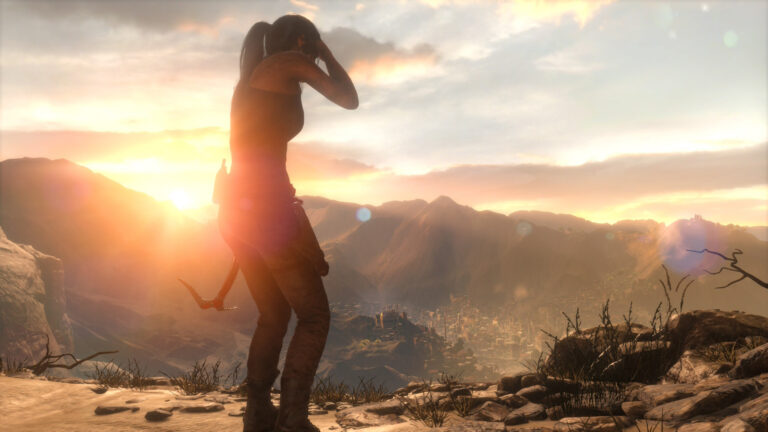
Much of the story follows Lara through the icy tundra of Siberia, exploring abandoned Russian gulags, ancient ruins, dense forests, and a cozy yet unsettling village. The gameplay revolves around semi-open hub worlds, primarily in the vast Siberian wilderness. Players traverse rugged terrain using Lara’s signature moves: wall running, ledge grabbing, rappelling with her ice axe, and a rope arrow for swinging and pulling down structures.
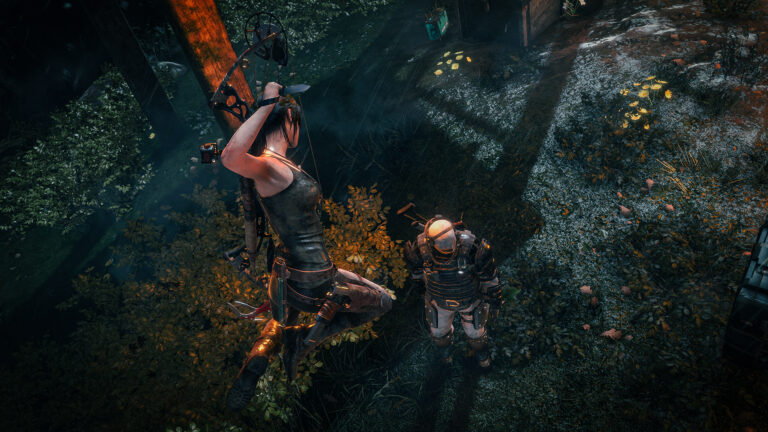
A funny thing about the combat is the easy XP exploit where you earn points for stealthily clearing an area without killing anyone—but then you can go back and take out every enemy you were supposed to handle nonlethally. It lets you max out your skill trees earlier than intended.
The developers probably intended players to rely on resource gathering and crafting—wood, cloth, hides, minerals, and plants to craft ammunition, arrows, explosives, weapon upgrades, and healing items on the fly. But the exploit makes it more enjoyable to cheese the game since the gameplay mechanics don’t have the best playability on Nintendo Switch 2.
Controls and Performance – A Mixed Bag
Yes, it’s true. The controls in Rise of the Tomb Raider feel noticeably delayed—and it was apparent right from the main menu when navigating the options. The lag is significant enough that aiming and camera movement feel much stiffer than they should, making the gameplay less enjoyable. Worse yet, the gyro-aim feature is limited to examining only the 3D collectible treasures. You can’t use the gyro to aim weapons at all.
The aiming doesn’t feel good due to the delay, but everything else gets by because Lara’s controls are from that time when action-adventure games were designed to be semi-automated. Lara’s jumps, climbing, and melee attacks are somewhat magnetized to make her connect more easily for casual gamers—dumbing down the gameplay compared to the older Tomb Raider titles.
Visuals and Atmosphere – Still a Stunner
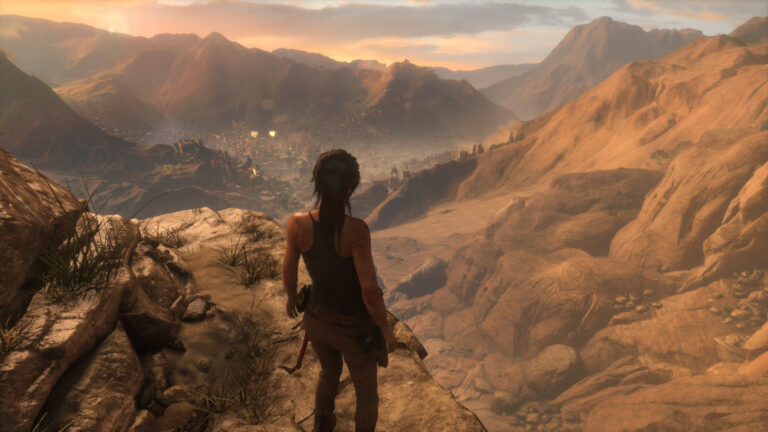
Despite the dated gameplay and boring climbing, Rise of the Tomb Raider still captivated me due to its immaculate presentation and atmosphere. The locations and sense of exploration are top-notch, and the puzzles are cleverly designed in a way that makes sense for an ancient tomb.
It’s hard to believe that it was originally an Xbox 360 game. On Nintendo Switch 2, it looks noticeably cleaner and more modern due to higher resolution, stable performance, and better texture filtering. It doesn’t quite match the atmospheric flair of the enhanced Xbox One and PS4 versions, leaning more toward a performance-focused mid-tier port. It sacrifices almost unnoticeable visual detail in exchange for portability and silky-smooth gameplay.
DLC and Endurance Mode – The Real Highlight
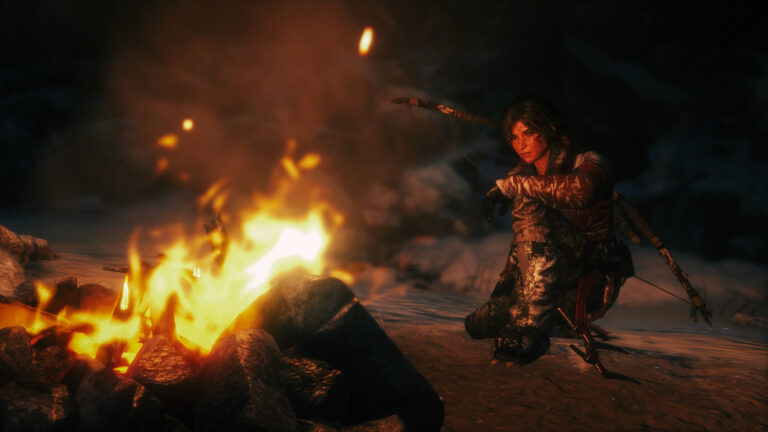
Included in this version is all previously released DLC, which adds some uninteresting story arcs—but the real headliner is the Endurance mode, which includes a co-op option. The goal is to survive as long as possible in a randomized section of the Siberian wilderness. Players must manage hunger, cold, craft supplies, hunt animals, fight enemies, and escape when the timer or conditions demand it.
The expeditions have become more complex because of the card system, which previously relied heavily on monetized microtransactions. It’s been rebalanced so that you earn points by completing challenges in the campaign or in other expeditions. The cards act as gameplay modifiers: some give you better starting weapons, extra skills, outfits with built-in perks, or make survival easier—while others hit you with reduced health, limited ammo, or tougher enemies. Each card comes with a score multiplier; helpful ones lower your final score percentage, while challenging ones boost it significantly. This builds a risk/reward system that keeps co-op play competitive yet friendly.
Verdict
There’s a lot to like about Rise of the Tomb Raider if you ignore the rehashed story and average gunplay. It looks awesome, and you get a lot of bang for your buck considering it’s a AAA game for thirty dollars. The co-op survival mode adds extra replay value, and the game itself is absolutely stunning to look at.
But the laggy controls on Switch 2, the predictable plot, and the dated gameplay hold it back from being the definitive version. If you’ve never played it and want a portable Lara experience, it’s worth picking up—just don’t expect the precision you’d get on other platforms.