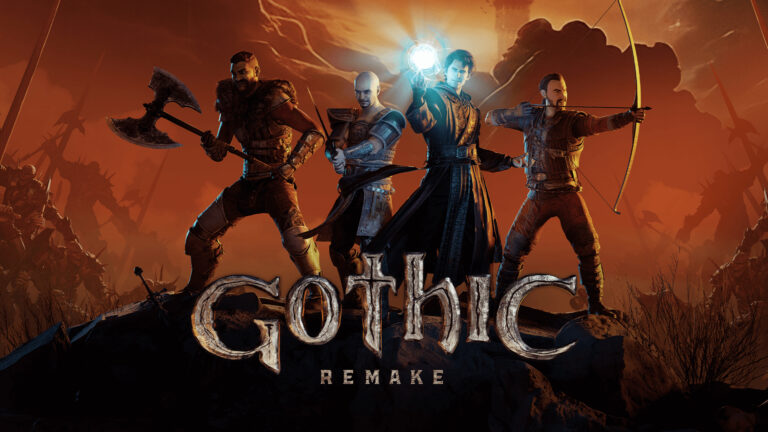
There is a particular kind of humbling that only certain games are capable of delivering—one that doesn’t announce itself with a tutorial pop-up or a gentle nudge from a glowing waypoint. It simply drops you into the world, points you toward the horizon, and lets the teeth of that world do the rest of the talking.
Gothic Remake, developed by Alkimia Interactive and published by THQ Nordic, is that kind of game. From the instant you’re tossed over the barrier into the Valley of Mines with nothing to your name—not even the basic dignity of a weapon—the Colony’s message is crystal clear: survive, learn, and earn everything you get.
Overview
-
Developer: Alkimia Interactive
-
Publisher: Alkimia Interactive, THQ Nordic
-
Platforms: Windows (reviewed), Xbox One, Xbox Series X|S, PlayStation 4, PlayStation 5
-
Release Date: June 5, 2026
-
Price: $49.99
A World Built on Desperation
The world you are thrown into is one built on political desperation and a creeping supernatural undercurrent that only reveals itself the deeper you dig.
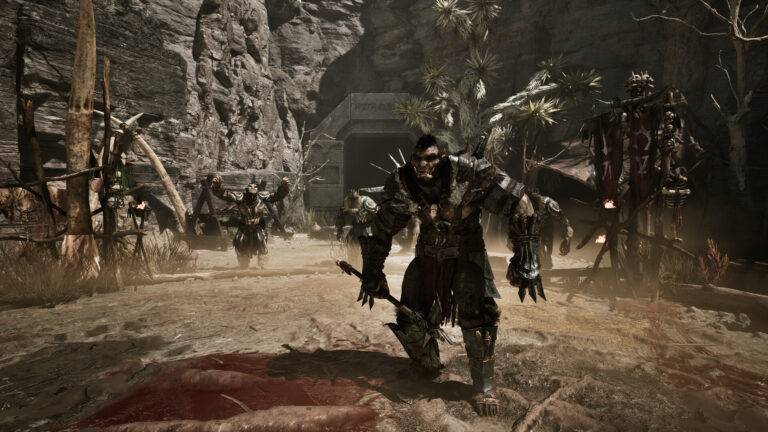
The kingdom of Myrtana is losing a war against an Orc invasion, and the magical ore buried beneath the mines of Khorinis is considered the key to turning the tide. Prisoners are conscripted and thrown into the valley to dig it out, watched over by a magical barrier erected to keep them from fleeing.
When the barrier collapsed, it imprisoned both guards and inmates within its confines. In the ensuing turmoil, three rival factions emerged: the Old Camp, ruthless and bolstered by political influence; the New Camp, resolute in its mission to escape; and the enigmatic Swamp Brotherhood, whose zealous devotion to a dormant deity known as the Sleeper becomes increasingly disconcerting upon closer examination.
Into this powder keg walks your nameless prisoner—a nobody with no allegiances and no leverage, slowly piecing together a conspiracy far older and stranger than anything the factions above him have grasped.
The story earns its intrigue not through cutscene exposition dumps but through the accumulation of overheard conversations, reluctant NPC confessions, and the gradual, quietly horrifying realization of what the barrier actually is and what sustains it.
Combat – Blunt, Deliberate, and Honest
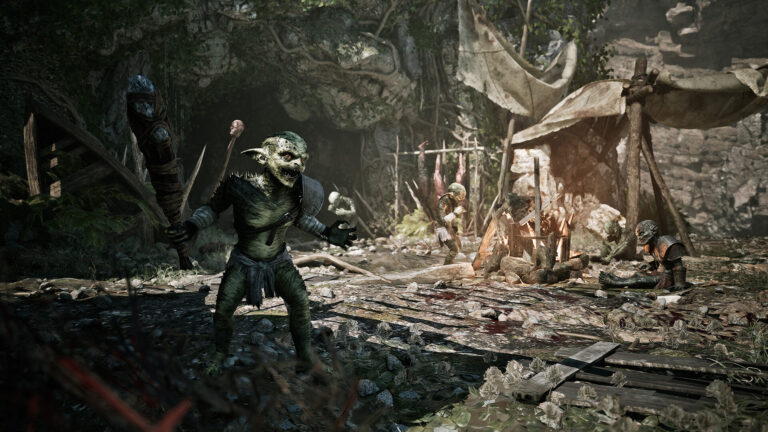
Combat in Gothic Remake is not elegant. It does not dress itself up with flourishes or reward button-mashing with satisfying visual noise. It is blunt and deliberate—a push-and-pull of timing and positioning that asks for patience over aggression. Strikes are committed, stamina matters, and enemies telegraph their intentions in ways that reward observation over reflex.
Players raised on more refined action RPG systems will likely find something to criticize in its lack of mechanical flair, and that criticism is not entirely without merit. But there is a functional honesty to how encounters play out that steadily wins you over.
The absence of spectacle makes contact feel consequential. When you finally put down an enemy that has been putting you in the dirt for days, no flashy execution animation is needed. You already know what you earned.
Difficulty – A Spine Made of Steel
What makes Gothic Remake genuinely remarkable in the current gaming landscape is not its faction intrigue or its scrappy combat philosophy. It is the game’s absolute refusal to apologize for having a spine. Three difficulty settings are available at the outset.
Once you choose, that choice is permanent. There is no revisiting the menu midway through because a section proved harder than anticipated. You live in the difficulty you selected—and that single design decision quietly transforms the entire experience.
In an era where the industry has developed a habit of framing unconditional difficulty control as thoughtful design, packaging it under the banner of accessibility while often using it to paper over a lack of confidence in the game’s own challenge, Gothic Remake does not participate in that conversation. It locks the door behind you and trusts you are capable of adapting.
The result is immersion of a kind that most modern RPGs cannot manufacture, regardless of budget. When escape is not an option, engagement becomes instinct. You’ll feel poised to read every item description and actually feel trepidation toward enemies above your level.
You talk to people because those conversations contain actual information rather than decorative flavor text. The game forces you to understand its rules—and that process of understanding is where the adventure actually lives.
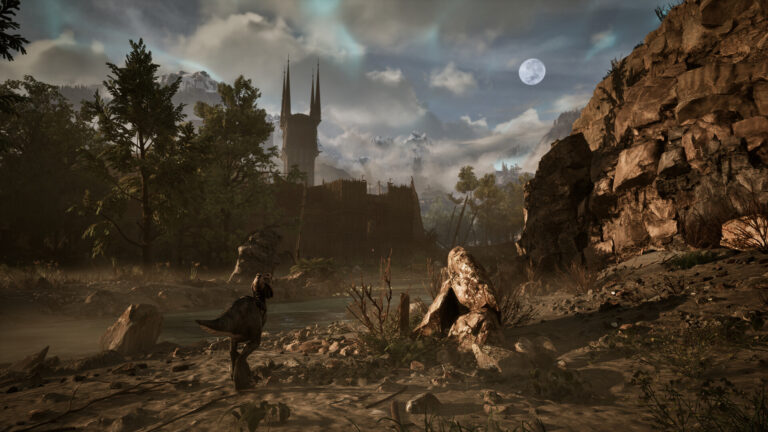
Visuals and Performance – Atmosphere Over Showmanship
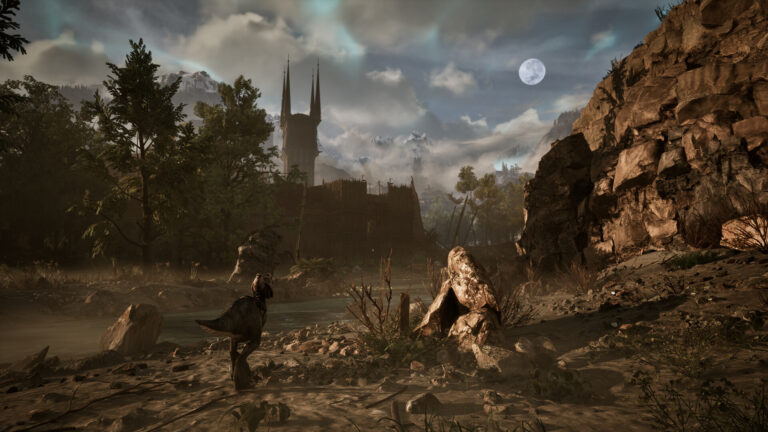
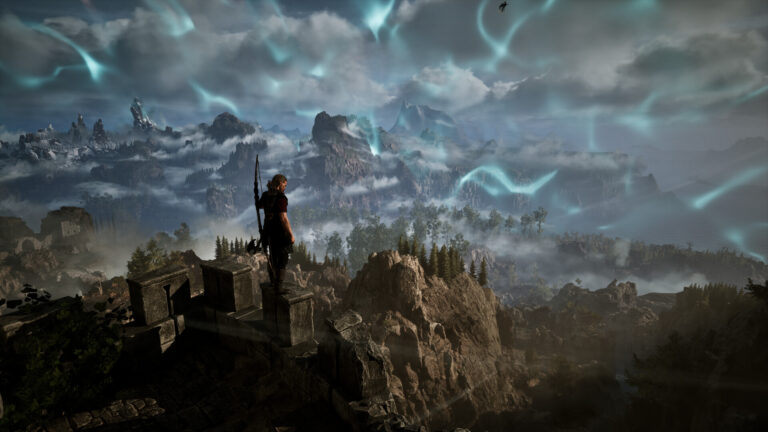
Alkimia has reinforced all of this with a visual overhaul built on Unreal Engine 5 that prioritizes atmosphere over raw technical showmanship. The Valley of Mines feels genuinely foreboding. Weather rolls across the landscape with weight. The camps look like places people actually inhabit and fight over rather than backdrop dressing.
Animation work can occasionally read as stiff in quieter moments, and some surfaces show their limitations up close. The art direction carries a coherent, grim personality that suits the source material far better than a more polished but characterless treatment would have.
A Note on Character Creation
One particular caveat: you must play as the game’s official main protagonist. There is no character creator and no way to play as a female for those who prefer that option. It’s a limitation that may disappoint some players, but it’s also a decision that keeps the narrative tightly focused on the Nameless Hero’s journey.
Rough Edges and Honest Design
Gothic Remake is not without its rough edges. The combat will frustrate those expecting precision; the early hours are deliberately punishing; and the Unreal Engine 5 presentation carries the familiar technical compromises the engine has brought to several recent titles.
None of that undermines what the game fundamentally is: a reminder that challenge and atmosphere are not obstacles to good design—they are the design.

Verdict
The original Gothic is a wonderful and challenging adventure RPG that keeps you inside your chosen difficulty, strips away your safety nets, and trusts you to figure out its world—a rarer thing than it should be.
Gothic Remake proves it is still possible to build one, and to build it without a Soulslike label, without hand-holding disguised as inclusion, and without ever once doubting whether the player can handle what is being asked of them.