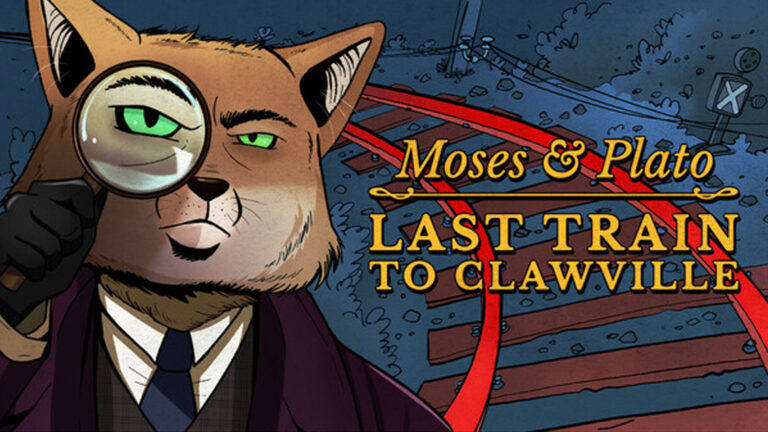
Why did the chicken cross the road? Obviously, to get to the other side. While The Wild Gentlemen have gained notoriety for their Chicken Police franchise, they’ve expanded the universe by crossing the road to give additional characters on the force more depth. At PAX East 2025, I met with The Wild Gentlemen and Toge Productions to preview their spin-off game, Moses & Plato – Last Train to Clawville. Between new mechanics and a different type of environment, the upcoming game felt like a spin on Agatha Christie’s Murder on the Orient Express. How does a game revolving around the rivals of The Chicken Police, Sonny & Marty, unfold? Find out in our review.
Overview
-
Developer: The Wild Gentlemen
-
Publisher: Toge Productions
-
Platforms: PC (Steam)
-
Release Date: April 14th, 2026
-
Players: 1
-
Price: $19.99 USD
The Story – A Mystery That’s Too Easy to Solve
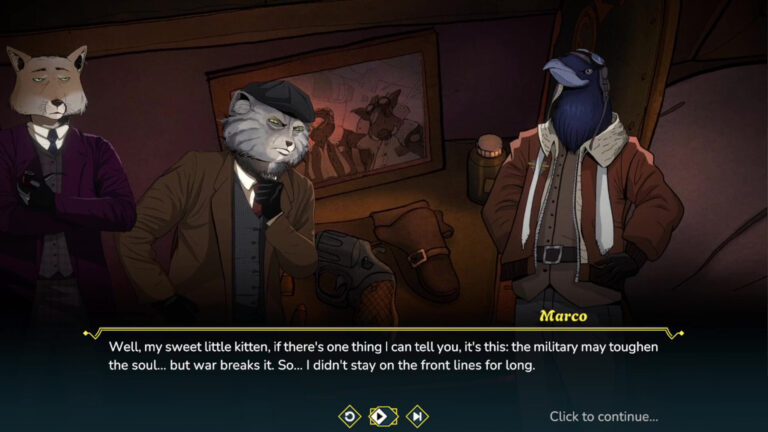
Moses & Plato – Last Train to Clawville is a point-and-click visual novel that serves as a spin-off of the Chicken Police franchise, expanding the universe by highlighting some of its other prevalent characters. In this iteration, Moses and Plato are sent to Stowonia to escort diplomats to Clawville and ensure they arrive safely for a peace accord.
On the journey, things turn south when Moses wakes up with a gun in his hands — and one of the ambassadors dead in the car with him. With time missing and holding the murder weapon, Moses must find the true culprit or go down for a crime he didn’t commit.
The story takes place over multiple days, where the player must use their time wisely to gather evidence, find motives, and interrogate suspects. Fail to examine your surroundings properly or ask the right questions, and you’ll fail the investigation at the end of each chapter.
The problem? You can figure out who the killer is within the first chapter. The game tries to throw in red herrings, but if you think logically, the culprit is painfully obvious. Out of all of The Wild Gentlemen’s games, Moses & Plato‘s mystery feels the most predictable. Multiple plot elements never truly feel like they could be the motive for the killing, and some characters feel like they’re there just to fill a void.
Plato himself — one of the two main characters — feels more like comic relief than a true partner. He has occasional funny one-liners, but he doesn’t play a pivotal role in solving the mystery beyond being someone to bounce ideas off of.

Gameplay – Solid Mechanics, Frustrating Hiccups
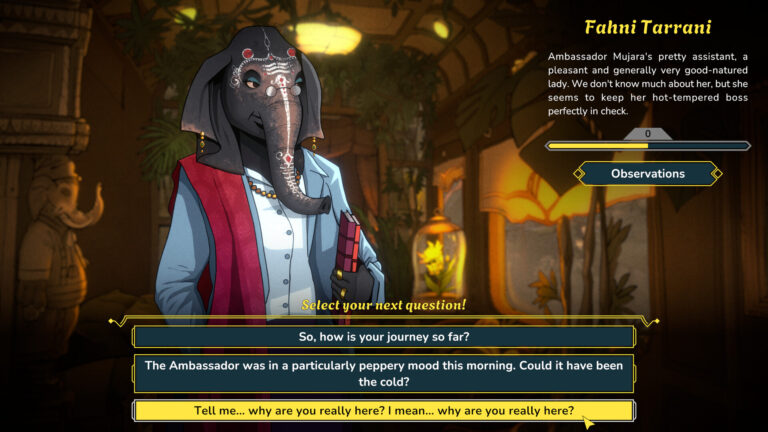
There are multiple ways to investigate people and clues. The first option is to ask guests questions directly. The second is to use Moses’ different senses — smell, hearing, or sight — to notice things that aren’t immediately obvious.
Once you’ve gathered evidence, you can examine it further by entering Moses’ Mind Garden and piecing everything together. Unfortunately, the Mind Garden has an issue where prompts don’t show new deductions, clues, or character history accurately, forcing you to guess what’s been added.
During interrogations, you can suspect someone is lying, but without finding the right clue, you’ll get reduced points or get the accusation wrong. Sometimes a lie seems obvious through basic deduction, but because you didn’t interact with the right person or find the clue, you can’t call it out.
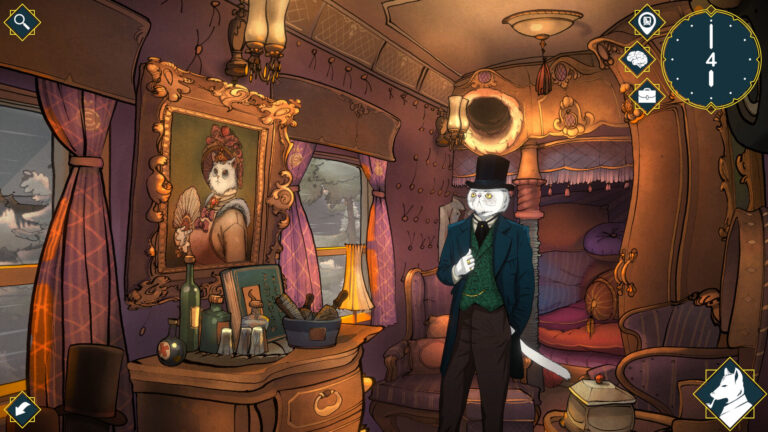
Exploration also suffers from unclear progression. There were times when there was no clear path forward, and it felt like you had to click every button and hope you did it in the right order to progress. Even after talking to other guests, it wasn’t always clear how to pass time. The game never gives hints, leaving you to figure it out on your own.
Art and Music – Where the Game Shines
Although the story is average, the game’s art direction and music are what truly shine. The characters are well-designed, and the environment is highly detailed — it feels like you’re experiencing somewhere you might have only seen in a dream. The game references Bioshock, Murder on the Orient Express, and other noir films and games, adding a layer of atmospheric richness.
The music adds intensity during suspenseful moments, especially during interrogations, where the score lets you know if you’re on the right path. However, the idle music in casual areas can get annoying due to its repetitive nature. A bit more variety would have gone a long way.
Technical Annoyances
Throughout our playthrough, several issues stood out:
-
The Mind Garden doesn’t show clues properly.
-
Pressing Escape to pause the game skips cutscenes or character interactions instead.
-
Loading a section of the story reloads after any dialogue or cutscenes, forcing you to replay sections if you accidentally skipped something.
Controller support is also incredibly difficult to use and feels more like a hindrance than a help.
Verdict
Moses & Plato – Last Train to Clawville is a stylish visual novel with a weak mystery at its core. Compared to other games in the franchise, it feels like the weakest iteration — a game that prioritised mechanics, art, and music over story depth. It’s mostly fun to play, but it lacks polish and meaningful engagement.
If you’re a completionist or a die-hard fan of the franchise, pick it up on sale. For everyone else, there are better mysteries to solve.