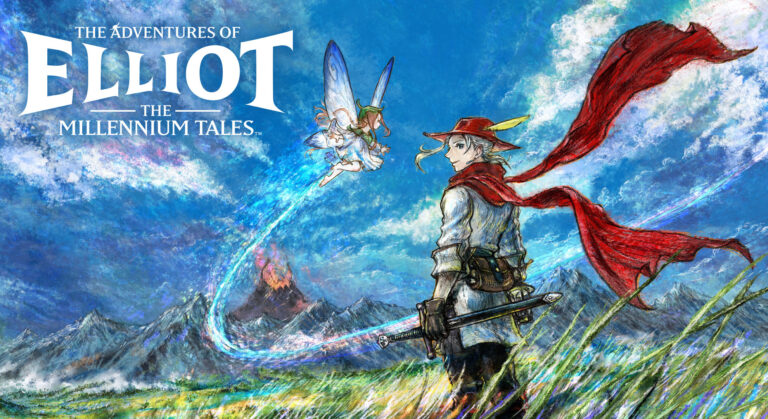
Square Enix is no stranger to making Zelda-likes. The Mana franchise was functionally their answer to Zelda, though they never quite reached the same cultural relevance because the series relied less on adventure gaming and fluid action, and more on a linear path and RPG mechanics. The closest Square ever came to making a true Zelda-like was Threads of Fate and Brave Fencer Musashi — and even then, they had more RPG-style elements than Tears of the Kingdom, which is arguably the most RPG-like Zelda has ever been.
Despite their best efforts, Square Enix hasn’t been able to match the success of Zelda with their action-adventure games. What is it that holds them back? Since the HD-2D style proved to be a reliable and cost-effective way to make charming, retro-inspired games, Square Enix has been open to experimentation. Could they finally produce a Zelda-like action-adventure game that connects with gamers? Find out in our The Adventures of Elliot: The Millennium Tales review!
Overview
-
Developer: ClayTech Works, Team Asano, Square Enix
-
Publisher: Square Enix
-
Platforms: Windows, PlayStation 5, Xbox Series X|S, Nintendo Switch 2 (reviewed)
-
Release Date: June 18, 2026
-
Price: $59.99
A Story That Never Quite Takes Off
What is it about the king’s advisors that makes them so incredibly evil? It seems like in every story where a king has an advisor, the advisor is obviously evil and vying for power. The Adventures of Elliot: The Millennium Tales begins with a devious royal advisor betraying his king, attempting to use a magical time portal to travel across eras and usurp the throne. The only one who can thwart him is Elliot, the local errand boy.
To make matters worse, the princess gets cursed, which threatens to break her barrier spell and leave humanity entirely defenseless. To lift the curse and save the kingdom, Elliot and his fairy friend travel through four distinct historical eras of Philabieldia. As Elliot explores the same continent across different points in history, he uncovers a millennium-old legacy and secrets about his own origins.
Unfortunately, The Millennium Tales barely takes advantage of its time-travelling themes or the mechanics of changing the past. You’re not going to get Chrono Trigger here. When the big bad goes back in time to change things, it doesn’t really affect the present as you know it. The time travel elements mostly pertain to the gameplay — blowing up an obstacle in the past will clear it in the other eras. The villain’s influence in the past mostly comes down to cursing the princess, which weakens the barrier around the kingdom, allowing invading beastmen to easily sneak across the border. Yet it’s a threat that never really happens. You just have to take everyone’s word for it. Despite the impending threat worrying everyone, the king entrusts only Elliot with sticking it to the evildoers.
Characters and Dialogue – A Weak Foundation
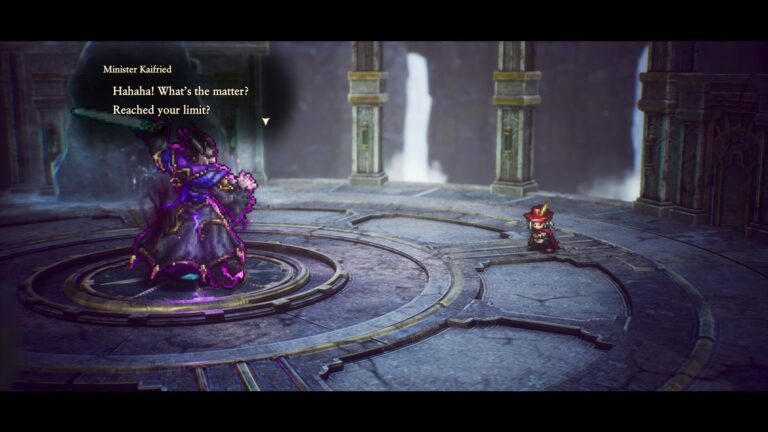
The Adventures of Elliot‘s story is incredibly flimsy. If the characters were written better, maybe it could carry the weak story. Unfortunately, Elliot is a generic do-gooder hero who lives to do what he’s told. The guy carries the kingdom on his back by putting himself on the line, and everyone else gives him hollow praise while he scrapes by being virtually homeless.
The characters, and especially the voice actors, deliver some unbearably cheesy lines flatly. The way Elliot’s fairy constantly chatters and comments on everything in the game borders on being downright condescending — like she’s some kind of snide video editor who cowardly chimes in with useless and unfunny commentary. Despite setting the chatter to its lowest level, she is still compelled to make inane comments.
The very easy puzzles feed into the lame dialogue. “Elliot, why did you move the glowing red pillar onto the glowing red switch?” Elliot replies flatly, “Because you told me to?” It may not unfold exactly like this, but it sure as hell feels like it.
There’s also lots of cutscenes — so much so that it somewhat deflates the excitement of exploring because you just know that once you reach your destination, there’s going to be a long-winded and embarrassing scene where actors phone it in and deliver tediously written dialogue that overexplains what’s happening. It feels like the writing is just painstakingly obvious commentary. Everything has to be pointed out and re-explained every time.
Combat and Weapons – The Silver Lining
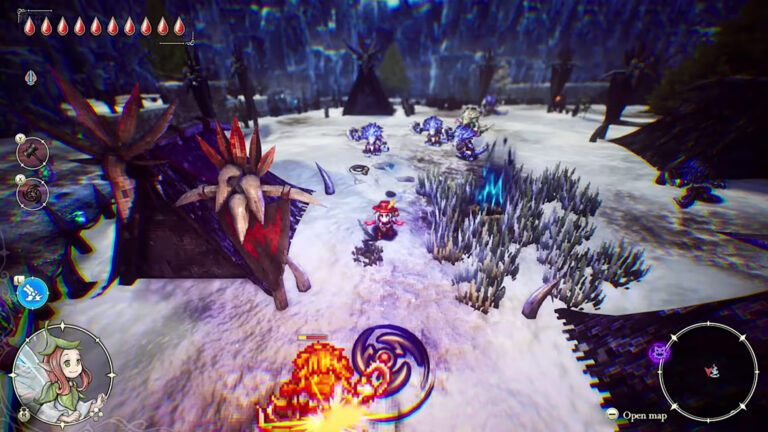
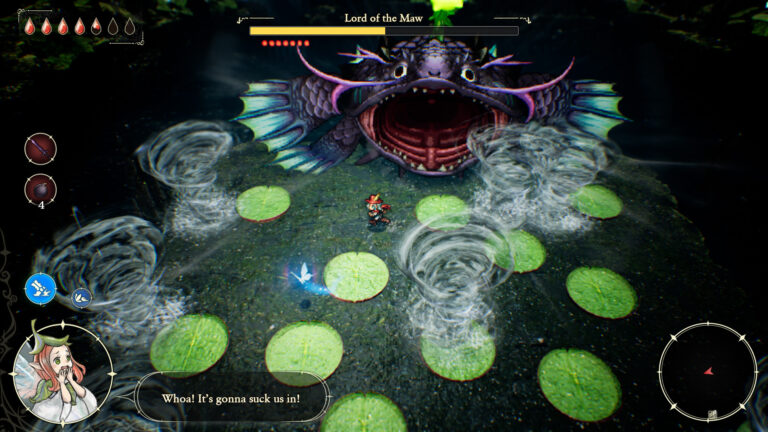
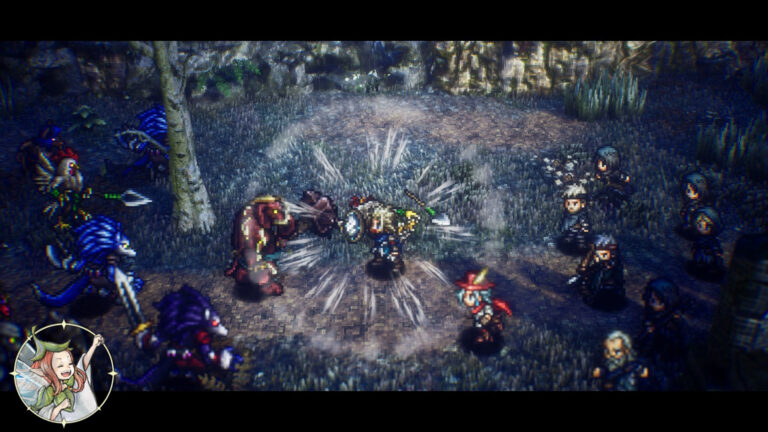
Although the companions suck, the combat is notably tactile and focuses on a diverse arsenal of seven weapons, including swords, bows, hammers, boomerangs, bombs, spears, and chains. Like a good Zelda-like, Elliot can equip two different weapons at any given time, allowing players to instantly switch between close-range melee strikes and ranged attacks on the fly to exploit enemy weaknesses.
The combat system becomes more complex through Magicite customization, allowing players to socket various magic crystals into weapons. Magicite ranges from enhancing elemental damage to modifying attack ranges and can even trigger powerful area-of-effect spells with specific moves. The Magicite is kind of like Materia, but less limiting, and Elliot can potentially become near godlike with the range of options he gains over the course of the adventure.
The problem with all these neat weapons is that Elliot’s sword is too effective and makes all of the interesting ones impractical. The swinging chain, big hammer, and spear aren’t worth using compared to the sword’s flexibility, and constantly swapping weapons isn’t much fun, so you’ll likely stick with the sword for most of the adventure.
Faie – Insufferable but Indispensable
Faie the fairy might be an insufferable irritant, but she’s an invaluable tool for both combat and traversal. Players control her independently using the right joystick to grab out-of-reach items, distract enemies, and solve somewhat brain-dead spatial puzzles. Her offensive magic gets pretty powerful after a few upgrades and can make short work of high-level enemies easily.
In addition, unlocking powers at various shrines grants her abilities like fire-summoning and a warp mechanic that lets Elliot instantly teleport to Faie’s location to cross massive horizontal gaps. There’s even a local co-op mode, where a second player can take direct control of Faie to assist.
What Works and What Doesn’t
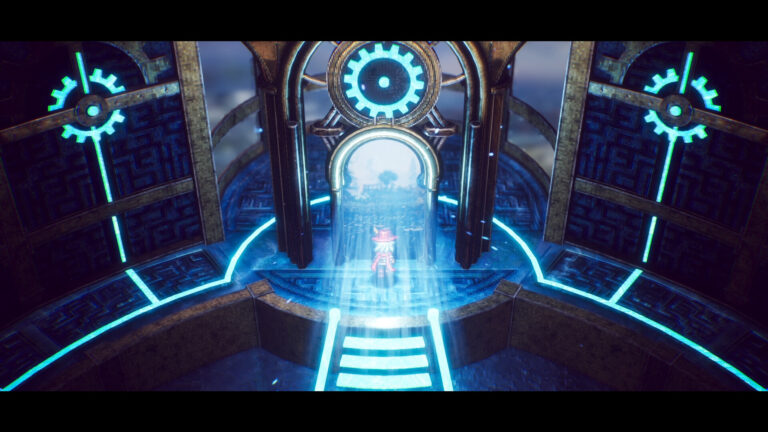
A lot of what makes Zelda’s secret sauce is letting players discover and not bogging them down with an uninteresting story. The Adventures of Elliot comes close to nailing it when it lets you loose and explore a world across eras at your own pace. There’s a lot to like: it looks great, exploring is fun, and it feels good to play.
It falls short when it comes to likeable characters and having a story to care about. The combat is solid, the weapon variety is commendable, and the Magicite system adds real depth — but none of that can fully compensate for a narrative that feels like it was written for children who need everything spelled out for them.
Verdict
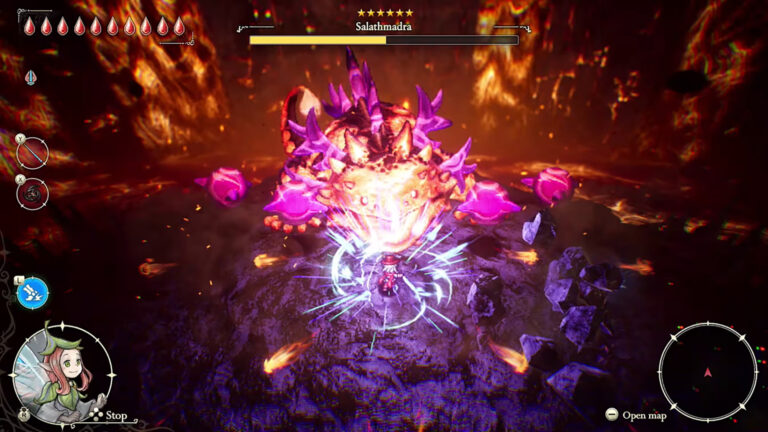
The Adventures of Elliot: The Millennium Tales is a game of contradictions. It plays well, looks gorgeous, and offers genuine exploration. But it’s dragged down by a forgettable story, grating dialogue, and characters that are more irritating than endearing. Square Enix has come close to cracking the Zelda-like formula — but close isn’t quite enough.