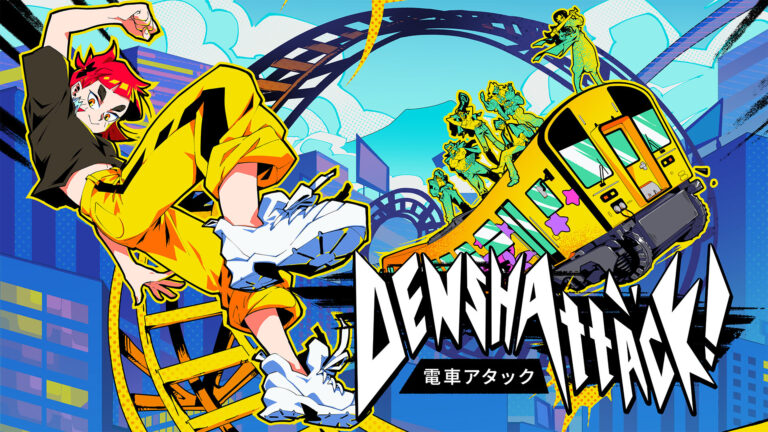
In Denshattack!, kickflipping a train car is as routine an action as jumping in a platformer. It relishes the unorthodox, celebrates the radical, and will send you flying back in your chair, eyes wide, hair pointing backward, mouth flapping like you’re taking in a leafblower from point-blank. It’s an unlawful blend of skateboarding and train engineering that is so endlessly exhilarating it makes me want to abandon my cushy life and hop behind the controls of a rail-bound rocket. There has never been a game like Denshattack!; it’s in a league all its own.
A Post-Utopian Japan
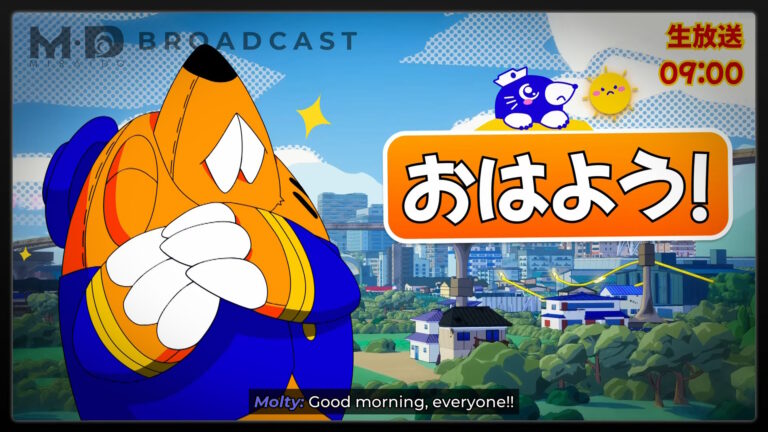
Denshattack! is set in a post-utopian Japan, where the antagonistic corporate overlords, Miraido, have contained the metropolitan areas in giant domed cities. Unbeknownst to those living within their literal bubble of misinformation and propaganda, the outside world has already begun the natural healing process. Denshattack! is the rebellion against Miraido, set on destroying the totalitarian corporation’s AI-driven stranglehold on the island nation via the railways.
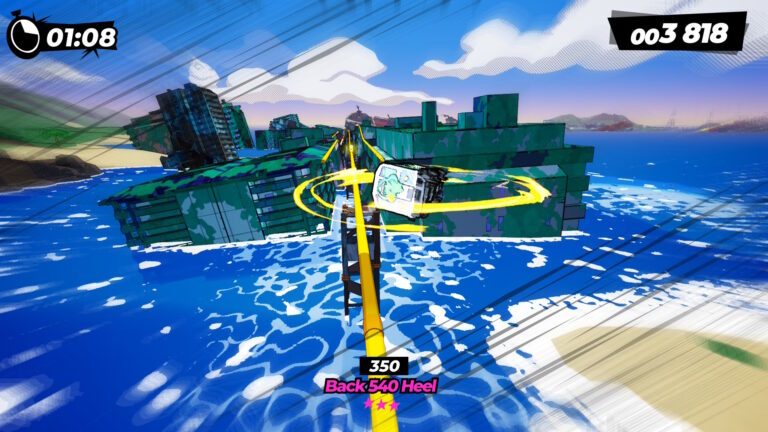
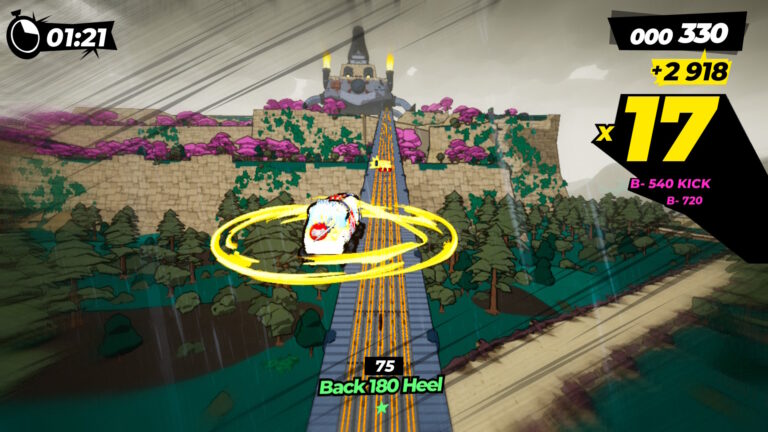
Controlling your rickety old train car like a skateboard, you’ll drift around tight corners, perform a variety of tricks and maneuvers — all of which are available to be studied and implemented thanks to the comprehensive tricktionary — and carve up the varied layout of each level to rack up points.
Style, Speed, and Score
Chaining together several tricks will multiply your point total, which is nifty for earning a gold medal at the end of each stage. Be careful not to get overly familiar with one or two go-to tricks, though, because the scorekeepers love variety and hate repetition, and that will reflect in your score if you hit the Back 540 move as many times as I did.
Beyond pushing for a high score, earning a medal is dependent on how quickly you reach the end, and how many missions you’re able to complete in the meantime — which includes acquiring a handful of collectibles that can be used to unlock customisation options and new trains with their own respective boosts and drawbacks.
This is why I feel Denshattack! is almost a blend of Tony Hawk Pro Skater and modern-day Sonic the Hedgehog — and that’s a compliment. Speed and style are the primary objectives, but those who fall in love with this game will burn hours replaying and mastering levels to earn the highest possible rank.
Controls That Click
The control scheme is simple and intuitive: move the train using the left stick, perform tricks with the right stick. The right trigger is the jump button, the left trigger is the handbrake, and clicking the right stick pulls the train’s horn, though you’re free to remap any of these inputs in the settings menu. It can feel like a lot to absorb at first, especially given the unfamiliar pathways it sends you along, but as soon as it clicks, you’re right on track.
Soon, you’ll have the benefit of customizable trains that give you fresh pieces of eye candy, and new gameplay styles to explore. Cosmetically, you can purchase sticker sets themed around different regions or gangs, each popping with their own distinct, graffitied flare. But beyond the superficial, you’ll gain access to a variety of train models each carrying their own strengths and weaknesses. Depending on your train, you may attack a high score with a different approach, opting to go trick-heavy, lean into grinding, or focus only on the hardest degree of tricks to maximise your combos. You’re free to tear this game open as you see fit.
Pure Adrenaline
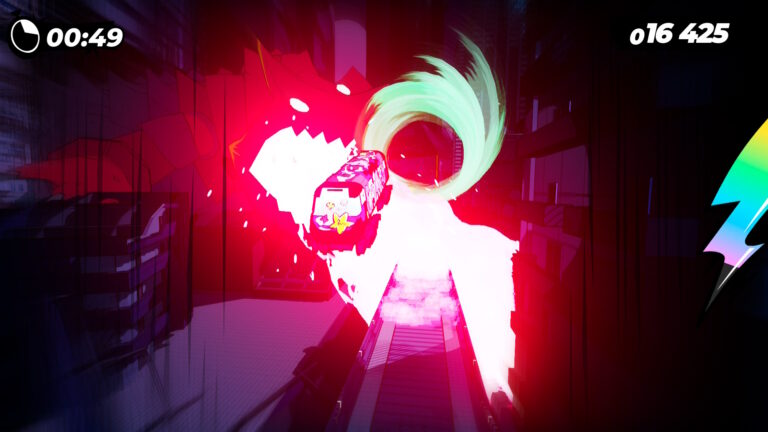
Denshattack! thrives in its gameplay — it’s pure adrenaline-pumping excitement. Switching from track to track, leaping through the air with a heelflip, rail-grinding, and wall-riding are the core fundamental building blocks upon which each stage is constructed. Somehow, while using those same pieces in level after level, nothing ever feels repetitive or mundane. It’s a guitar solo packed within a steaming bowl of ramen — unconventional, but totally radical.
One moment, you’re going off-rail, slaloming down a ski slope while simultaneously destroying an AI database; the next, you’re playing a part in a giant tag-team kaiju battle. You may engage in a baseball duel, or a one-on-one with a mechanized castle. Riding atop a loose ferris wheel or commandeering a shark. It’s all seamless, and it’s incredible how many fresh ideas Denshattack! is able to stuff into each of its nine worlds — there are no “we’ve seen this before” moments in the entire campaign.
Boss Battles – The Peak of Creativity
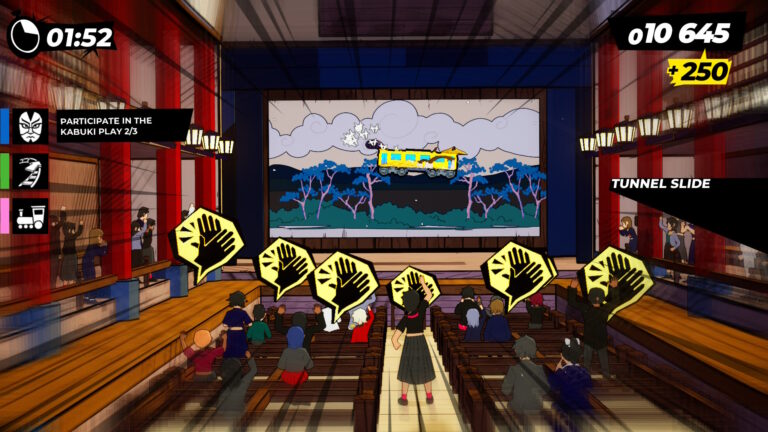
At the end of every chapter, you’ll get the chance to battle the boss of the region’s Denshattack gang, and with each finale comes a drastic gameplay switchup. The boss battles are the peak of creativity, with the rival gang’s primary motif — baseball, fashion, music, etc — morphing the play style in a way that is both wildly unorthodox, yet a seamless fit within Denshattack!‘s world.
Skills are taught and implemented gradually, starting with the more fundamental moves and slowly adding layers to the gameplay. As you get a more solid grasp of each mechanic — typically with a level or two designed to help you find your train legs — they’ll begin to integrate into future levels, adding layers of depth onto the endlessly creative runs.
Replayability and Length
Denshattack!‘s main story will only take about 10 hours of your time to play through normally, but it shines when you return to perfect your craft, check off every mission on the list, and optimise your runs to the max. It’s as replayable as you want it to be, as you’ll face no repercussions for simply playing each level once, but restarting a level from the beginning for another shot at a particularly challenging mission is a button’s press away.
A Love Letter to Japan
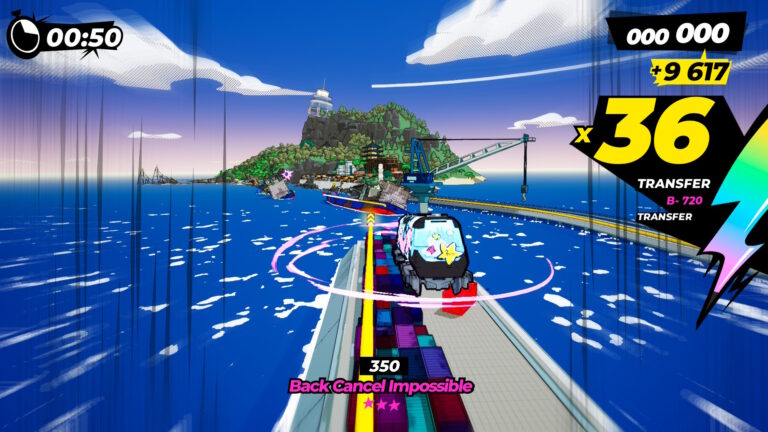
I’ll be the first to admit that the Japanese setting may have influenced my adoration for Denshattack!, as zooming through the train track rollercoaster in familiar spots near my home had me squealing with excitement and rolling around my couch in a giddy fever. I cheered when approaching Enoshima. I hollered in the Hiroshima ballpark. Riding the Yamanote line — Tokyo’s most boring train route — was exhilarating, and that’s a sentence I never thought I would say in my entire life. Everything about Undercoders’ interpretation of Japan was the perfect setting for a Densha-based skateboarding adventure.
Soundtrack and Visuals
It’s all wrapped in an expertly-themed soundtrack, crammed full with 80 music tracks that blend for a feeling that strikes the intersection of electric, hip-hop, and J-Pop, like a Japanese tilt on Jet Set Radio. Menus and more mellow moments are met with stable hip hop beats. On rhythm with the boss battles’ gameplay switchups, the soundtrack peaks in the chapter-closing battles, complete with addicting J-Pop bangers.
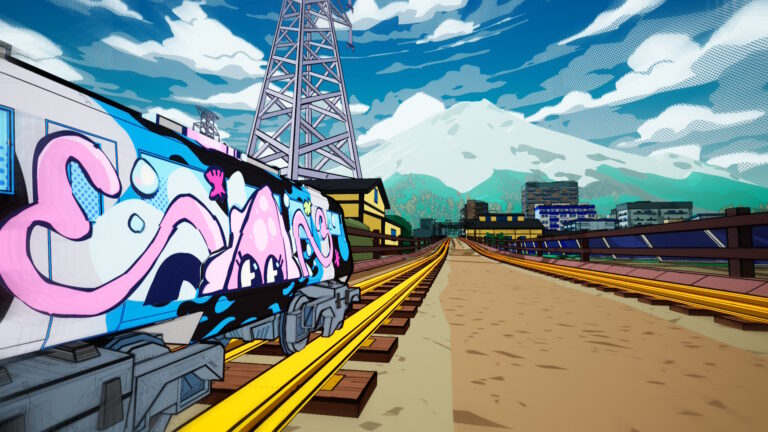
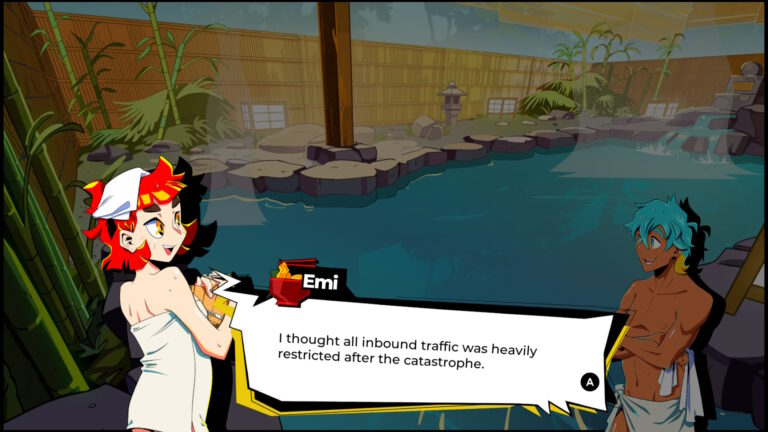
Denshattack!‘s bold, refined anime art style is stunning. Thick, dark outlines and a distinct identity define every character, and the artist’s vision is eye candy during onsen breaks and animated cutscenes. Though the 3D character models aren’t nearly as radical as their hand-drawn standard, the entire world is vibrant and saturated in a shell-shaded, eye-popping style. Flash and colour bursts bleed into the gameplay as well, allowing every track and grind rail to stand out despite the overactive scenery.
Story and Voice Acting – A Minor Hiccup
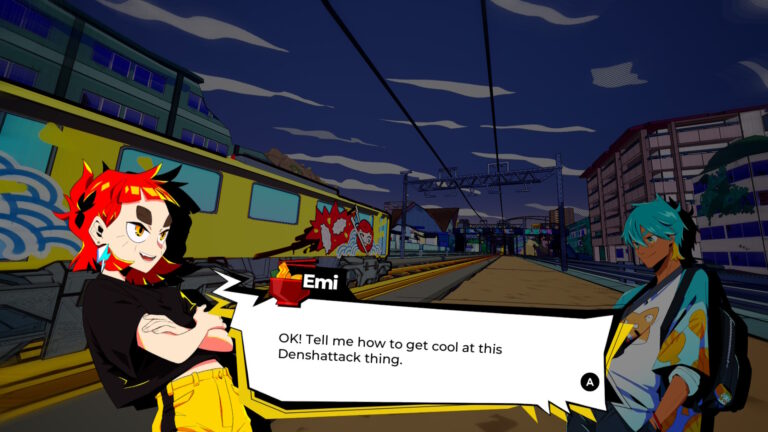
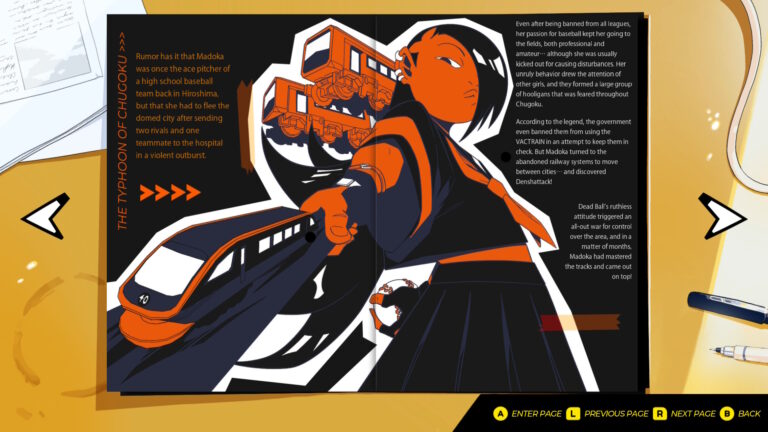
While Emi simultaneously humiliates and befriends gang bosses from across Japan, her tireless optimism and infectious craving to challenge the villainous VACTRAIN developed by Miraido only drives home the fact that Denshattacking is worthless if the driver isn’t having fun. It’s an odd dissonance to have rival gangs bemoan the tragedy of their life in one breath — seasoned with disdain for Emi’s happy-go-lucky approach — and gleefully joke around about how even the law enforcement and dangers of the world around you don’t really deserve to be taken seriously.
The English voice acting was also challenging to take seriously, with a few awkward deliveries. This is easily remedied by switching to the Japanese voice acting option — which is excellent — with English subtitles. Fortunately, the story isn’t the main draw of Denshattack!; the gameplay is the main seller here.
✅ What Works
- Unique and exhilarating gameplay concept
- Incredible variety across 9 worlds
- Creative, wildly different boss battles
- Stunning anime art style
- 80-track soundtrack blending hip-hop and J-Pop
- High replayability and deep customisation
❌ What Doesn’t
- English voice acting is uneven
- Story can feel dissonant in tone
- 3D character models lack the impact of 2D art
Verdict
When it comes to gameplay, there has never been a title quite like Denshattack!. Fusing parkour, speed, and a complicated tricktionary make for an experience wholly its own. And that experience is pure adrenaline, packed with heart-pumping stunts, gorgeous and varied settings, and an unscratchable itch to dive back in for just one more try at that elusive gold medal. Born from an idea so unique and creative that I’d be shocked if other studios don’t try their hand at piggybacking off its brilliance. But today, this is Undercoders’ masterpiece — one that deserves to be named among the greatest indies ever made.