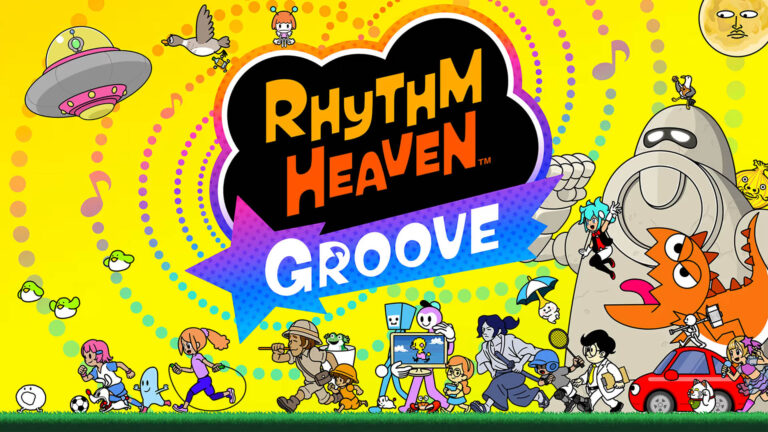
The music is blasting, the bass rattling your skull, and the lights of the dance floor beckon you like a first-chair moth to a luminescent cello. From the corner of your eye, you spot it, but reactively discard the thought. After over 15 years, it certainly wouldn’t have the gall to make such a belated appearance. Fighting the urge to steal a second glance, your eyeline snaps back to the scene of the crime, and your eyewitness testimony proves itself to be correct. It’s the composer; it’s the craftsman of the groove. Back from its extended hiatus is Rhythm Heaven, and its arrival can only mean one thing — the party is on.
Overview
-
Developer: Nintendo EPD
-
Publisher: Nintendo
-
Platforms: Switch (Reviewed)
-
Release Date: July 2, 2026
-
Price: $39.99
A Simple Premise, Perfectly Executed
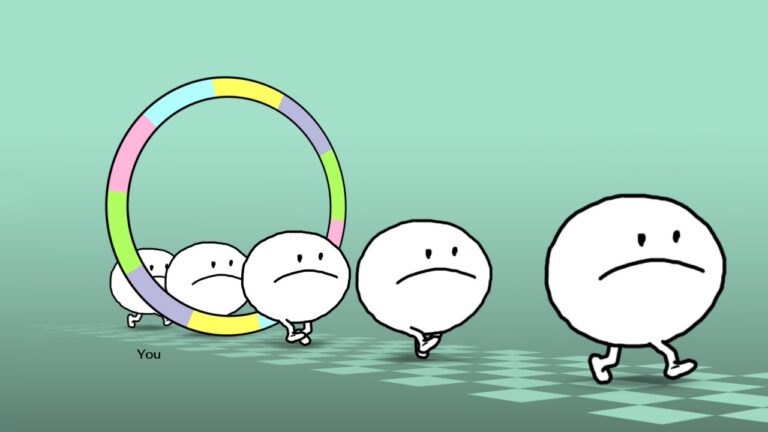
For the uninitiated, Rhythm Heaven is a Nintendo IP that pushes its players to one simple premise: keep the beat. That’s it. Press the A button on cue, and you’ll find yourself clearing stages with a metronome’s tempo. Not entirely unlike WarioWare, Inc., Rhythm Tengoku began as a Japanese-only minigame collection on the Game Boy Advance, with wacky characters and even wackier premises anchored by the simple objective of tapping the right button at the right moment.
Hopping from the GBA to the Nintendo DS and ultimately to the Wii, Rhythm Heaven Fever (2011) was the final fully-original release in the head-bopping series. That was 15 years ago. While fans could get their fix on the 2015 3DS best-of collection (Megamix), individuals have been born, grown up, and are now studying for their driver’s exams between proper releases of this well-received series. Finally getting the band back together with Groove — and at a discounted retail price point, no less — the music phenomenon is busting moves like a teenager again.
There is no story, no background, no reason. Rhythm Heaven simply is, and it is up to you, the player, to keep up with its tempo. Pairing your button inputs to a varied and vast library of backing tracks, playing Rhythm Heaven can feel like playing an actual instrument, adding your flair to the bumping tunes blaring through your home stereo. It’s a satisfying and addictive gameplay style, and one that still feels fresh all these years later.
Minigame Madness
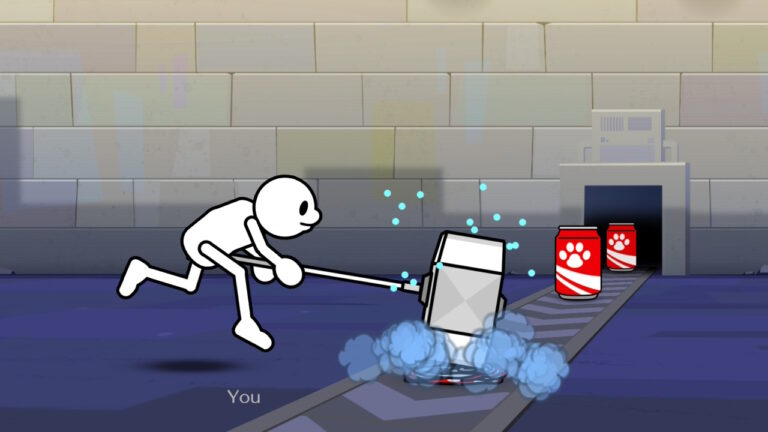
The gameplay varies significantly between each minigame, so each player will find themselves drawn to different experiences. One of my favourites included Slice N Dice Kitchen, where you’ll snag and chop tomatoes, peppers, and broccoli to the beat of the home cook’s catchy humming. You’ll fight to remain focused as duotone rave lights fire off with every successful catch, until the kitchen eventually gives way to a beautiful and complicated ocean scene. It’s hilarious and stunning all at the same time, and a joy to shoulder shimmy along with.
Another minigame includes a complicated yet rhythmically satisfying button combination as a background dancer in a J-Pop concert. Oh yeah, Groove injects actual J-Pop tracks into its library, breeding parasitic earworms that are still whistling in my ear as I draft this review.
Finally, and most bafflingly, we have The A Game, where you’ll push the A button at the right moment to complete the words “Tea”, “Soda”, and “Cocoa” with their trailing vowel sound. What began as a simple spelling game gave way to the most hilarious series of JPEG images I could have never expected. Reading is fundamental, kids. Just ask this absolute father sipping a piping hot cup of tea through his stunningly manicured beard.
Remixes and Challenge
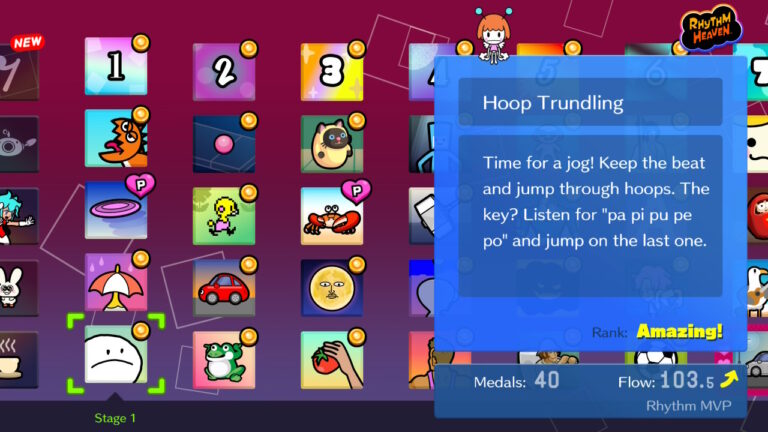
There is no shortage of creativity or wackiness in the Rhythm Heaven series, and Groove might just be the most absurd yet. Each minigame plays slightly differently, so it helps to have a brief tutorial before being thrown into the mosh pit. It helps to nod your head or tap your toes to the beat, as you’ll notice your player character or objects in the background bobbing their heads in turn. Or count the rhythm out loud for the trickier tasks like Disc Dog that require you to wait for seven beats before reacting.
The associated remixes mash four minigames into one, swapping between games beneath the same rockin’ backing track. Roll with the changes, and you just might survive well enough to claim an Amazing grade and a dazzling medal. It’s a challenging and enthralling test of skill to cap off each of the game’s stages.
The credits will roll after just 6 stages, consisting of four minigames and a remix each, but you’re still far from finished. From there, the single-player menu gives way to modified versions of earlier rhythm games until stage 8, where you can start again from the beginning in revamped sequels of the games that you had already mastered.

Art Style – One Foot In, One Foot Out
Learning that the updated art style we saw in the original Slice N Dice teaser had been reverted back to the low-quality standard of the series’ past initially left me feeling queasy. Groove finally innovates on an aesthetic direction that I felt made previous titles — namely Fever and Megamix — appear cheap and outdated. The art style could have made previous games feel like budget titles just a notch above the plentiful shovelware that saturated Nintendo console libraries between the late 2000s and the mid-2010s. Unfortunately, glimmers of artistic innovation aren’t fully realised in Groove.
One foot in and one foot out, the 80 minigames of the primary single-player mode shake up the visual format from screen to screen — occasionally blending multiple styles within the same minigame in a jarringly hilarious effort to distract you from keeping the beat. Between pencil scratchings, painted scenery, and hyper-realism, the artists would occasionally come back up for air with the trademark image the series has come to be known for. Some minigames make the most of their screen space, spanning stunning skyscapes with detailed, gorgeous artwork. Others leaned too hard on the permanent marker look prevalent in previous releases. It works fine as-is, as a complete graphical overhaul and synchronised aesthetic isn’t entirely necessary in a fragmented, minigame-based game about pushing a button to the beat. However, some of Groove‘s game modes are brought down by an overreliance on the series’ visual conventions.

Beatspell – A Rhythm RPG Gem
Beatspell is the star of the side-modes, as a full-on rhythm-based RPG that uses on-time button combos to clear through enemies, level up spells, and battle a final boss at the end of every chapter. The story is minimal, but the gameplay is incredibly satisfying as you learn a variety of spells for attack, defence, healing, and all the typical RPG actions. But every battle is set to a metronome, and the strength of your spells depends on the timing of your spell combos. Perfectly timed beats will land as a critical hit, while misses will lead to pitiful damage numbers, or even a critical failure that will lose you precious time.
Getting into the rhythm of Beatspell peaks when you feel completely comfortable with your spellbook and start chaining together your magic in immediate succession. It feels like nailing a drum solo that’s so face-melting that the live audience’s faces actually melted off. It’s a bit too easy — I died a total of zero times in my first playthrough — and it only takes a little over an hour to clear the full campaign. I hope that Nintendo pushes this mode further in a future release. Heck, I’d fork over $20 or so for an expanded E-shop release of Beatspell. But if they do that, I beg the artists to innovate a bit more.
The customary sharpie-outlined 2D art style can be hit-or-miss today in the big 2026, but they sort of bring down the Beatspell mode for me. Very reminiscent of the Wario Ware series’ standard look, the character models in Rhythm Heaven Groove pop out with the sharp, black outlines, and the colourful design looks great as a still image. But the moment these characters are animated, the entire art direction begins to feel very cheap and reminiscent of a middle schooler’s animation project — especially when subjecting humans or animals. I had this same feeling when playing Rhythm Heaven Megamix on the 3DS; this art style simply doesn’t hold up on modern hardware. Nintendo should have taken this opportunity to fully abandon Rhythm Heaven‘s outdated visuals, but instead we’re left in an awkward middle ground that teases innovation without fully committing.

Multiplayer – Fun but Forgettable
Multiplayer was also largely plagued by this art style, with flat, boring designs and minimal character animation outside of bend-and-squish beat-bobbing. The cooperative multiplayer is a good time for 2-4 players who don’t want to take turns playing through the main single-player mode, though the quality of these minigames never quite reaches the heights of Rhythm Heaven‘s main event.
Verdict
Rhythm Heaven Groove is a triumphant return from a decade-and-a-half hibernation. While it struggles to abandon some of the archaic visual design the series has grown attached to, the juiced-up soundtrack, consistently strong rhythm games, and wonderfully intriguing Beatspell RPG have me believing that this series has the legs to carry the music into the modern age. Though it probably would have been better off abandoning convention more aggressively to make space for innovation, Rhythm Heaven Groove hits all the right notes.